
What Does the Bible Say About Tithing and Giving - Where in Scripture to Find the Answer

Few topics in the Christian life generate as much discussion, as much confusion, and as much genuine searching of Scripture as the subject of tithing and giving. What exactly does the Bible say about it? Is the tithe still required for Christians today? How much should a believer give? What is the difference between tithing and generous giving? And what does God actually promise to those who give faithfully?
These are not trivial questions. They touch the intersection of faith and finances - two areas of life that are deeply personal, often sensitive, and profoundly important. And the good news is that Scripture addresses them with remarkable clarity, depth, and consistency across both the Old and New Testaments.
If you have ever asked "what does the Bible say about tithing and giving?" - this article will walk you through the most important passages in Scripture on the subject, show you the full biblical picture of generosity from Genesis to Revelation, and help you understand what God's Word actually says about money, giving, and the heart behind both.
What Is a Tithe? What the Bible Means by the Word
The word tithe simply means a tenth. In its most basic biblical sense, a tithe is the giving of one tenth of one's income or produce to God - specifically, in the Old Testament context, to the support of the Levitical priesthood, the temple, and the care of the poor. It is important to understand this definition clearly before exploring where in Scripture tithing is discussed - because the word is sometimes used loosely today in ways that differ from its specific biblical meaning.
The concept of giving a portion of what one has received back to God predates the Mosaic law by centuries - which is one of the reasons many theologians argue that the principle behind tithing is not merely a legal obligation of the old covenant but a deep expression of the acknowledgment that everything we have comes from God and belongs ultimately to Him.
Where in Scripture Does It Talk About Tithing and Giving - Old Testament
Genesis 14:18–20 - Abraham Gives a Tenth to Melchizedek
The first recorded instance of a tithe in all of Scripture appears in Genesis 14, centuries before the law of Moses was given. After a great military victory, Abraham - the father of the faith - gives a tenth of everything to Melchizedek, the priest of God Most High. There is no command recorded here. No law requiring it. Abraham gives freely, spontaneously, and generously - a tenth of the spoils of victory - as an act of worship and acknowledgment of God's provision and blessing.
This is where in Scripture tithing first appears - and its appearance here, before the law, is deeply significant. It suggests that the impulse to give a tenth to God is not merely a legal obligation but a natural expression of faith and gratitude. The writer of Hebrews later uses this same episode to make a profound theological argument about the priesthood of Jesus Christ - which tells us that this moment carries far more weight than it might first appear.
Genesis 28:20–22 - Jacob Vows to Give a Tenth
The second pre-law tithe in Scripture appears in Genesis 28, where Jacob - having just experienced the dream of the ladder reaching to heaven and the promise of God's presence and blessing - makes a vow to God. If God will be with him, keep him safe, provide for him, and bring him home, then God will be his God - and of everything God gives him, he will give a tenth back.
This is where in Scripture the tithe is first explicitly connected to a vow and to the expectation of God's blessing and provision. Jacob is not bargaining with God - he is expressing in practical terms what it would look like for God to be his God. The giving of a tenth is, for Jacob, the concrete expression of a life lived in dependent, grateful relationship with God.
Leviticus 27:30–33 - The Tithe Belongs to the Lord
With the giving of the Mosaic law, the tithe becomes a formal requirement for the people of Israel. Leviticus 27:30 states it plainly - a tithe of everything from the land, whether grain from the soil or fruit from the trees, belongs to the Lord. It is holy to the Lord. This is where in Scripture the tithe transitions from a voluntary expression of faith to a formal legal obligation - and the language used is significant. The tithe does not become the Lord's when it is given. It already belongs to Him. Giving the tithe is the act of returning to God what was always His.
Numbers 18:21–24 - The Tithe Supports the Levites
Numbers 18 reveals one of the primary purposes of the tithe in the Old Testament economy - the support of the Levites, who had no land inheritance of their own because their calling was the ministry of the tabernacle and later the temple. The tithe was God's practical provision for those who devoted themselves to His service. This is where in Scripture the social and ministerial function of the tithe is most clearly explained - it was not merely a religious exercise but a practical system for sustaining the worship life of the nation and caring for those who led it.
Deuteronomy 14:22–29 - The Tithe and the Care of the Poor
Deuteronomy 14 expands the picture of tithing in the Old Testament significantly. Beyond supporting the Levites, the tithe was also connected to the care of the foreigner, the fatherless, and the widow - the most vulnerable members of Israelite society. Every third year, the tithe was to be stored in the local towns specifically for the support of those who had nothing. This is where in Scripture the connection between tithing and justice - between giving to God and caring for the poor - is most clearly established. Biblical generosity is never merely religious. It is always also social.
Malachi 3:10 - Bring the Whole Tithe Into the Storehouse
Malachi 3:10 is perhaps the most quoted and most debated passage on tithing in the entire Old Testament. God speaks to a people who have been withholding their tithes and offerings and calls them to bring the whole tithe into the storehouse - and then makes an extraordinary promise. Test me in this, He says. See if I will not throw open the floodgates of heaven and pour out so much blessing that there will not be room enough to store it.
This is where in Scripture God makes His most direct and most specific promise in connection with faithful giving - and it is remarkable for several reasons. First, it is one of only a handful of places in Scripture where God explicitly invites His people to test Him. Second, the promise is breathtaking in its scope - overflowing, abundant, more-than-you-can-contain blessing. Third, the context makes clear that withholding the tithe is described in terms of robbing God - which tells us how seriously God regards faithful giving.
This passage has generated enormous discussion among theologians and pastors about whether and how it applies to New Testament believers. But whatever position one takes on the specific application of the tithe in the new covenant, the principle it reveals about God's heart is undeniable - He is not a God who is indifferent to the generosity of His people, and He is not a God who fails to respond to faithful, trusting giving.
Proverbs 3:9–10 - Honor the Lord With Your Wealth
Proverbs 3:9–10 contains one of the most straightforward and most practically stated commands about giving in the entire Old Testament. Honor the Lord with your wealth, with the firstfruits of all your crops. Then your barns will be filled to overflowing and your vats will brim over with new wine. This is where in Scripture the concept of firstfruits giving - giving to God first, before meeting your own needs, as an act of priority and trust - is most clearly and most simply expressed.
The logic of firstfruits giving is profound. To give to God first is to declare, in the most practical way possible, that He is first in your life - that your trust is in Him as the source of all provision, not in your own ability to earn and accumulate. It is faith made financial.
Where in Scripture Does It Talk About Tithing and Giving - New Testament
Matthew 23:23 - You Should Have Practiced the Latter Without Neglecting the Former
Jesus addresses tithing directly in Matthew 23:23 - and His response is nuanced and instructive. He is rebuking the Pharisees for their meticulous tithing of tiny herbs while neglecting the weightier matters of the law - justice, mercy, and faithfulness. And then He says something that is crucial for understanding His view of the tithe: "You should have practiced the latter without neglecting the former."
This is where in Scripture Jesus affirms tithing without making it the centre of His teaching on generosity. He does not abolish it. He contextualizes it - placing it within the larger framework of a life characterized by justice, mercy, and faithfulness. Tithing matters, Jesus implies. But it is the floor of generosity, not the ceiling. And a tithe given without justice and mercy is missing the point entirely.
Mark 12:41–44 - The Widow's Offering
One of the most powerful and most countercultural teachings on giving in the entire New Testament comes not from a direct command but from an observation Jesus makes in the temple. He watches the wealthy putting large amounts into the treasury - and then He watches a poor widow put in two small copper coins. And He tells His disciples that she has given more than all the others combined - because they gave out of their wealth, while she gave out of her poverty, everything she had, all she had to live on.
This is where in Scripture the principle that giving is measured not by amount but by sacrifice is stated most powerfully. The widow's two coins were worth next to nothing in monetary terms. But in the economy of the kingdom of God, they outweighed the large gifts of the wealthy because they cost her everything. This passage permanently reframes the question of giving - from "how much did I give?" to "what did it cost me?"
Luke 6:38 - Give, and It Will Be Given to You
Luke 6:38 contains one of the most comprehensive and most often quoted promises about giving in all of the New Testament. Give, and it will be given to you - a good measure, pressed down, shaken together and running over, will be poured into your lap. For with the measure you use, it will be measured to you.
This is where in Scripture the principle of proportional return on generosity is stated most vividly - the image of grain being pressed down into a measuring vessel, shaken to settle, and then filled until it runs over the edges. Jesus is not promising that every financial gift will be returned in financial terms. But He is making a profound and consistent principle explicit - generosity and return are connected in the economy of God's kingdom. The measure with which you give is the measure with which you will receive.
Luke 19:1–10 - Zacchaeus and Radical Generosity
The story of Zacchaeus is one of the most vivid illustrations of transformed generosity in the entire New Testament. Zacchaeus is a chief tax collector - wealthy, powerful, and deeply unpopular - who climbs a tree to see Jesus and ends up hosting Him for dinner. And the encounter with Jesus transforms him completely. He stands up and announces that he will give half of his possessions to the poor and repay anyone he has cheated four times the amount.
This is where in Scripture the connection between encountering Jesus and radical, spontaneous generosity is most dramatically illustrated. Zacchaeus is not responding to a command about tithing. He is responding to grace - and the response of grace in the heart is always generosity. The encounter with Jesus does not produce a careful calculation of the minimum required. It produces extravagant, joyful, costly giving.
Acts 2:44–45 - They Sold Property and Goods to Give to Anyone Who Had Need
The early church described in Acts 2 models a level of generosity that goes far beyond any tithe. The believers shared everything they had. They sold property and possessions to give to anyone who had need. They held their material goods loosely because their identity and their security were rooted not in what they owned but in who they belonged to.
This is where in Scripture the corporate, communal dimension of Christian generosity is most powerfully illustrated - and it is remarkable not just for how much was given but for the spirit in which it was given. There is no record of obligation or compulsion. The giving flows from a community that has been transformed by the gospel and is living out its implications in the most practical way possible.
2 Corinthians 8:1–7 - The Macedonian Churches and Overflowing Generosity
In 2 Corinthians 8, Paul holds up the churches of Macedonia as an extraordinary example of generosity for the Corinthian believers to follow. What makes the Macedonian example so striking is the circumstances in which it took place - they gave out of severe trial and extreme poverty, and yet they gave beyond their ability, entirely of their own accord, pleading for the privilege of sharing in the gift. This is where in Scripture generosity is most dramatically disconnected from comfortable circumstances and most powerfully connected to the grace of God at work in human hearts. These were not wealthy people giving from abundance. They were poor people giving from poverty - and doing so joyfully, voluntarily, and extravagantly.
2 Corinthians 8:9 - Though He Was Rich, Yet for Your Sake He Became Poor
In the middle of his appeal for generous giving, Paul grounds the call to generosity in the most profound theological reality imaginable - the example of Jesus Christ Himself. Though He was rich - infinitely, eternally, unimaginably rich - yet for your sake He became poor, so that you through His poverty might become rich. This is where in Scripture Christian generosity is rooted most deeply - not in law, not in obligation, not in the promise of return, but in the self-emptying generosity of the Son of God who gave everything He had for the sake of others.
Every act of Christian generosity is, at its deepest level, a participation in and a reflection of what Jesus did. We give because He gave - completely, sacrificially, and at infinite cost.
2 Corinthians 9:6–8 - God Loves a Cheerful Giver
2 Corinthians 9:6–8 is one of the most important passages on giving in the entire New Testament - and it is worth reading carefully because it contains three of the most significant principles about Christian generosity found anywhere in Scripture.
First - whoever sows sparingly will also reap sparingly, and whoever sows generously will also reap generously. The agricultural image of sowing and reaping is one of the most consistent pictures of giving in the entire Bible - what you give out comes back multiplied. This is not a prosperity gospel promise. It is a kingdom principle about the nature of generosity and the faithfulness of God.
Second - each of you should give what you have decided in your heart to give, not reluctantly or under compulsion. This is one of the clearest statements in the New Testament about the freedom and the voluntariness of Christian giving. There is no compulsion. No guilt. No minimum required. The only standard is what you have decided in your own heart - freely, deliberately, and with full ownership of the decision.
Third - and perhaps the most famous line in the entire passage - God loves a cheerful giver. The Greek word translated as cheerful here is the word from which we get the English word hilarious. God loves a hilariously generous giver - someone who gives with such freedom and such joy that the giving itself is a delight. This is where in Scripture the spirit of Christian giving is most clearly and most memorably defined. Not reluctant. Not calculated. Not minimum compliance. Hilariously, joyfully, freely generous.
2 Corinthians 9:10–11 - He Who Supplies Seed to the Sower
Paul continues in 2 Corinthians 9 with one of the most encouraging promises about generosity in the entire New Testament. God supplies seed to the sower - meaning He provides the very resources with which we give. And He will also supply and increase your store of seed and will enlarge the harvest of your righteousness. You will be enriched in every way so that you can be generous on every occasion. This is where in Scripture the cycle of generosity and provision is most clearly described - God gives so that we can give, and our giving leads to more giving. Generosity is not a drain on resources. In the economy of God's kingdom, it is a multiplier.
1 Timothy 6:17–19 - Be Rich in Good Deeds and Generous
Paul's instruction to Timothy about wealthy believers contains one of the most balanced and most practical statements about money and generosity in the entire New Testament. He tells Timothy to instruct those who are rich not to be arrogant or to put their hope in wealth, but to put their hope in God - and to be rich in good deeds, generous and willing to share. This is where in Scripture wealth itself is not condemned but the trust in wealth is - and generosity is presented as the practical antidote to the spiritual danger that money represents. The wealthy believer is called not to poverty but to generosity - to hold their wealth loosely and use it freely for the good of others.
Hebrews 13:16 - Do Not Forget to Do Good and to Share With Others
Hebrews 13:16 contains one of the simplest and most direct statements about giving in the entire New Testament. Do not forget to do good and to share with others, for with such sacrifices God is pleased. This is where in Scripture practical generosity - doing good, sharing what you have - is placed in the category of sacrifice that pleases God. It is not merely a nice thing to do. It is an act of worship. A sacrifice that rises before God as a pleasing offering.
Should Christians Tithe Today? What Scripture Suggests
This is the question that generates the most discussion - and Scripture gives us material for a thoughtful and balanced answer.
The tithe as a specific legal requirement of the Mosaic law is part of the old covenant system that was fulfilled in Christ. The New Testament does not repeat the command to tithe a tenth in the way the Old Testament does - which is why some theologians argue that Christians are not technically obligated to tithe in the old covenant sense.
However, several important observations from Scripture suggest that the tithe remains a profoundly useful and spiritually significant practice for Christians today:
The tithe predates the law. Abraham and Jacob both tithed before the Mosaic law was given - which suggests the principle is rooted in something deeper than legal obligation. It is an expression of faith and gratitude that goes back to the very beginning of the story of God's people.
Jesus affirmed tithing without abolishing it. Matthew 23:23 shows Jesus telling the Pharisees they should practice tithing - without suggesting it is no longer relevant.
The New Testament raises the bar, not lowers it. The Macedonian churches gave beyond their ability. Zacchaeus gave half of everything he owned. The early church sold property to meet the needs of others. The spirit of New Testament giving is consistently more generous than a tenth, not less.
The principle of firstfruits giving is timeless. Proverbs 3:9–10 and the entire theology of giving in Scripture point toward a posture of giving to God first - as an expression of trust and priority - that applies across both testaments.
The most faithful reading of Scripture on this question seems to be this - for Christians today, the tithe is not a legal ceiling but a generous floor. It is a wise, historically grounded, spiritually significant starting point for generosity. But the spirit of the New Testament calls believers further - toward the kind of joyful, sacrificial, extravagant giving that reflects the self-giving of Jesus Christ Himself.
What Does the Bible Tell Us About the Heart of Giving?
Drawing together all of these passages, Scripture builds a remarkably clear picture of what God cares about most when it comes to giving:
Give from a grateful heart. Both the Old and New Testaments root generosity in gratitude - the recognition that everything we have is a gift from God and that giving is the natural response of a heart that knows it.
Give cheerfully and freely. 2 Corinthians 9:7 makes the spirit of giving the primary concern - not the amount, but the attitude. God loves a cheerful, hilarious, free giver.
Give sacrificially. The widow's two coins and the Macedonian churches both model giving that costs something real. Genuine generosity is rarely painless.
Give first. Proverbs 3:9 calls for firstfruits giving - God first, as an act of trust and priority, before the rest is divided up.
Give generously. Luke 6:38 and 2 Corinthians 9:6 both point to a principle of proportional return - the measure with which you give is connected to the measure with which you receive. Generosity is never a bad investment in the kingdom of God.
Give to those in need. Deuteronomy 14, Acts 2, and 1 Timothy 6 all connect giving to the practical care of those who have less. Biblical generosity is always pointed outward - toward the poor, the vulnerable, the stranger, and the struggling.
Give in response to grace. The deepest and most lasting motivation for Christian generosity is not law, not obligation, not the promise of return, but the grace of Jesus Christ - who became poor so that we might become rich. We give because He gave first and gave most.
Whatever your current practice of giving - whether you tithe faithfully, give occasionally, or are just beginning to think seriously about what Scripture says on the subject - the invitation of Scripture is the same for every believer. Come to this with an open heart and an open hand. Consider what God has given you. Consider what He has promised. And then give - freely, joyfully, generously, and in the spirit of the One who gave everything for you.
You will not out-give God. No one ever has.
Looking for specific Bible verses on tithing, generosity, money, and related topics? Browse the Bible Scripture Verses topic index to find exactly where in Scripture God's Word speaks on the subjects that matter most to you.
Explore More Truth: Related Posts

Where in Scripture Does the Bible Talk About Anxiety and Worry - And What Does God Say About It?
Anxiety is one of the most universal human experiences. It does not matter whether you lived in ancient Israel or in the modern world - the weight of worry, fear, and an uncertain future has always been part of the human condition. And because it is so deeply human, it...

Who Is the Holy Spirit? Where in Scripture Does the Bible Describe the Spirit of God
The Forgotten Person of the TrinityWhen we talk about God, we often focus on God the Father and God the Son (Jesus Christ). But the Holy Spirit - the third Person of the Trinity - is just as divine, eternal, and powerful. Yet, many believers struggle to understand:Who is the...

What Does the Bible Say About Fear - Finding Courage and Strength in God’s Word
Fear is one of the oldest and most universal human experiences. From the moment Adam and Eve hid themselves from God in the garden of Eden - the first recorded act of fear in human history - to the disciples cowering behind locked doors after the crucifixion, to every person...

Where in Scripture Does It Talk About Forgiveness - Finding Peace Through God’s Word
Forgiveness may be the most powerful theme in all of Scripture. It runs like a golden thread from the very first pages of Genesis to the final verses of Revelation - woven into every story, every covenant, every promise God has ever made to His people. And yet for many...

Bible Verses About Love - What Scripture Really Says From Genesis to Revelation
The Foundation of Love in ScriptureLove is the cornerstone of the Christian faith. From the very beginning, the Bible reveals a God who is love (1 John 4:8) and calls His people to love Him and others with the same depth and sacrifice. But what does Scripture really say about...

Where in Scripture Does the Bible Talk About Death and What Happens After We Die?
There is no question more universal, more personal, or more pressing than this one: what happens when we die? Every human being who has ever lived has faced it - lying awake in the quiet of the night, standing at the graveside of someone they loved, or sitting in a...

Where in Scripture Does It Talk About Hope - Bible Verses to Strengthen Your Faith
Hope is one of the most powerful forces in human experience. It is what gets people out of bed in the morning when life is hard. It is what keeps a person moving forward when everything around them says to give up. It is what holds a grieving heart together...

Where in Scripture Does It Talk About Prayer - What the Bible Says About Talking to God
Of all the privileges given to the believer in Scripture, few are as extraordinary as this one: the Creator of the universe invites His people to talk to Him. Not through a priest or an intermediary, not with elaborate rituals or perfectly chosen words, but directly, personally, and honestly -...

What Does the Bible Say About Depression - Scripture Verses for Those Who Are Struggling
A note before we begin: This article is intended as a biblical and spiritual resource for those seeking comfort and perspective from Scripture during difficult times. If you are experiencing severe depression, please reach out to a qualified mental health professional, a trusted pastor, or a crisis support service. God's...
The Importance of Rome to the Christian Church
Rome holds a special and sacred place in Christian history. For centuries, Christians from around the world have traveled to Rome to deepen their faith, visit holy sites, and connect with the roots of the Church. Known as the heart of Catholicism, Rome remains one of the most important spiritual...

Bible Verses About Strength - Where in Scripture God Speaks to Those Who Feel Weak
Finding Strength in God's WordHave you ever felt exhausted, overwhelmed, or simply unable to face the challenges of life? You are not alone. Millions of people - from every walk of life and stage of faith - have turned to the Bible in moments of weakness, searching for hope, courage,...

Is Hell Real? Where in Scripture Does the Bible Talk About Hell and Eternal Judgment
The Hard Truth About HellFew topics spark as much fear, controversy, or curiosity as the reality of hell. Is it a literal place of eternal punishment, or just a metaphor for separation from God? Does the Bible explicitly teach about hell, or is it a man-made concept?The answer is clear...
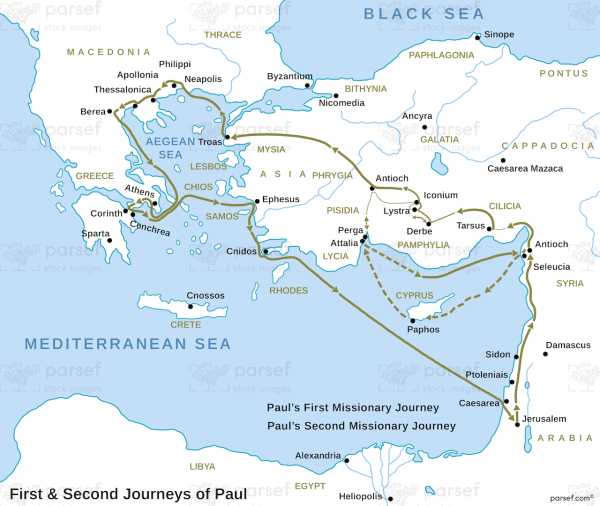
Exploring Scripture? Parsef.com offers a curated collection of Bible maps covering the Exodus, the Promised Land, and Paul's missionary journeys - ideal for deeper study of the biblical narrative.