
Where in Scripture Does It Talk About Forgiveness - Finding Peace Through God’s Word

Forgiveness may be the most powerful theme in all of Scripture. It runs like a golden thread from the very first pages of Genesis to the final verses of Revelation - woven into every story, every covenant, every promise God has ever made to His people. And yet for many people, both inside and outside the church, forgiveness remains one of the hardest things to fully understand, fully receive, and fully extend to others.
If you have ever asked "where in Scripture does the Bible talk about forgiveness?" you are asking one of the most important questions a person can ask. Because the answer touches everything - your relationship with God, your relationship with others, and the deepest places of your own heart.
This article walks through the key passages in both the Old and New Testaments where Scripture speaks about forgiveness - what it is, where it comes from, what it costs, and what it makes possible.
What Does the Bible Mean by Forgiveness?
The biblical concept of forgiveness is richer and deeper than the word itself might suggest. In the Old Testament, the Hebrew words used for forgiveness carry the meanings of to lift and carry away, to cover over, and to send away. In the New Testament, the primary Greek word translated as forgiveness means to release or to let go - as in releasing a debt that is owed.
Together these images paint a remarkable picture. Biblical forgiveness is not simply overlooking an offence or pretending it did not happen. It is the complete removal of guilt and debt - lifted away, covered over, sent far from the one who carried it. This is the kind of forgiveness God offers, and it is the kind He calls His people to extend to one another.
Where in Scripture Does It Talk About Forgiveness - Old Testament
Psalm 103:10–12 - As Far as the East Is From the West
Psalm 103 is one of the most sweeping celebrations of God's forgiveness in all of Scripture. The psalmist declares that God does not treat us as our sins deserve, and that He has removed our transgressions from us as far as the east is from the west. That is not a limited distance - east and west never meet. This is where in Scripture we find one of the most vivid and complete pictures of how thoroughly God forgives.
Isaiah 1:18 - Though Your Sins Are Like Scarlet
The book of Isaiah contains one of the most famous invitations to forgiveness in the entire Bible. God speaks directly to a people stained by sin and rebellion and offers something that defies human logic - the complete transformation of guilt into innocence. This is where in Scripture the radical and undeserved nature of God's forgiveness is put on full display. No sin is too deep, no stain too set, for God's forgiveness to reach.
Isaiah 43:25 - I Will Remember Your Sins No More
In Isaiah 43, God makes a declaration that is breathtaking in its completeness. He says that He blots out transgressions for His own sake and will remember sins no more. This is where in Scripture we see that divine forgiveness is not partial or conditional - God does not forgive and then keep a record. He forgives and forgets, entirely and permanently.
Micah 7:19 - He Will Hurl Our Sins Into the Depths of the Sea
The prophet Micah uses one of the most striking images in all of Scripture to describe what God does with forgiven sin - He hurls it into the depths of the ocean. In the ancient world, the sea represented the ultimate place of no return. What went to the bottom of the sea was gone forever. This is where in Scripture God's forgiveness is described in terms of absolute and irreversible removal.
Nehemiah 9:17 - A God Ready to Forgive
In Nehemiah 9, during a long prayer of national confession, God is described in a phrase that captures His essential character toward sinful people - He is a God ready to forgive. Not reluctant. Not conditional. Ready. This small phrase in a long historical prayer is one of the most personally encouraging descriptions of God's heart toward forgiveness anywhere in the Old Testament.
Lamentations 3:22–23 - His Mercies Are New Every Morning
The book of Lamentations is written in the depths of national catastrophe and grief. And yet from within that darkness comes one of Scripture's most beloved declarations of hope. God's mercies are described as new every morning - which means that forgiveness and fresh starts are not a one-time offer but a daily reality for those who turn to Him. This is where in Scripture we find that God's forgiveness is not just complete - it is renewable.
Where in Scripture Does It Talk About Forgiveness - New Testament
Matthew 6:12–15 - Forgive Us Our Debts, As We Forgive Our Debtors
In the Lord's Prayer, Jesus teaches His disciples to ask God for forgiveness in the same breath as committing to forgive others. This connection is not accidental. Immediately after giving the prayer, Jesus expands on this single point above all others - if you forgive others, your heavenly Father will forgive you. This is where in Scripture the link between receiving forgiveness and extending it to others is made most explicit and most direct.
This is also one of the most challenging passages in Scripture on forgiveness. Because it makes clear that the forgiveness we receive from God and the forgiveness we offer to others are not two separate things - they are deeply, permanently connected.
Luke 15:11–32 - The Parable of the Prodigal Son
Perhaps no story in all of Scripture illustrates the heart of God toward the forgiven sinner more powerfully than the parable of the prodigal son. A son takes his inheritance, wastes it in reckless living, ends up destitute and desperate, and finally comes to his senses and turns back toward home - fully expecting punishment and prepared to beg for a servant's position.
What he receives instead is one of the most moving images in the entire Bible. His father sees him while he is still a long way off, runs to meet him, throws his arms around him, and calls for a celebration. There is no lecture. No conditions. No probationary period. Just immediate, extravagant, joyful restoration.
This is where in Scripture the character of a forgiving God is shown most beautifully and most completely - not in doctrine or declaration, but in story.
Luke 23:34 - Father, Forgive Them
In one of the most extraordinary moments in all of human history, Jesus - hanging on the cross, suffering at the hands of those who put Him there - prays for the forgiveness of His executioners. "Father, forgive them, for they do not know what they are doing."
This is where in Scripture we see forgiveness at its most costly and its most complete. If the Son of God could pray those words in that moment, it forever defines what biblical forgiveness looks like - not a feeling, not a transaction, but a choice made in the midst of real pain, rooted in love rather than in what is deserved.
Ephesians 1:7 - Redemption Through His Blood, the Forgiveness of Sins
The apostle Paul writing to the Ephesians places forgiveness at the very centre of what it means to be a Christian. Forgiveness is not a side benefit of faith - it is the heart of the gospel. We have redemption through the blood of Christ, the forgiveness of sins, in accordance with the riches of God's grace. This is where in Scripture forgiveness is connected most directly to the cross and to the person and work of Jesus Christ.
Colossians 3:13 - Forgive as the Lord Forgave You
In Colossians 3, Paul gives one of the clearest and most challenging instructions on forgiving other people found anywhere in Scripture. The standard he sets is not "forgive when you feel ready" or "forgive when the other person deserves it." The standard is: forgive as the Lord forgave you. That means completely. Freely. Before it was earned. At great personal cost.
This is where in Scripture the forgiveness of God becomes the model and the measure for how believers are called to forgive one another.
1 John 1:9 - If We Confess Our Sins, He Is Faithful and Just to Forgive
For the believer wrestling with guilt and wondering whether God's forgiveness truly applies to them, 1 John 1:9 is one of the most important verses in all of Scripture. The promise is unconditional and the language is absolute - if we confess our sins, God is faithful and just to forgive us our sins and to cleanse us from all unrighteousness. Not some unrighteousness. Not most sins. All.
This is where in Scripture the personal assurance of God's forgiveness is stated most clearly and most completely for the individual believer.
Romans 8:1 - No Condemnation for Those Who Are in Christ Jesus
Romans 8:1 is one of the most liberating verses in the entire New Testament. For those who are in Christ Jesus, there is now no condemnation. None. This is the ultimate destination of biblical forgiveness - not just the removal of guilt in a legal sense, but the complete absence of condemnation. The slate is not merely wiped clean. It is declared clean, permanently, by the righteousness of Christ applied to the believer.
What Does the Bible Tell Us About Forgiving Others?
Scripture is equally clear that forgiveness is not only something we receive - it is something we are called to give. And the Bible does not shy away from how difficult that can be. Here are the key principles Scripture teaches about forgiving other people:
Forgiveness is a command, not a suggestion. Colossians 3:13, Ephesians 4:32, and Matthew 6:14–15 all make it clear that forgiving others is not optional for the believer. It is a direct instruction from God.
Forgiveness does not mean pretending the offence did not happen. Biblical forgiveness is honest about the reality of the wrong done. It releases the offender from the debt without minimizing what the debt was.
Forgiveness is not always immediate. Scripture is realistic about the process. Forgiving someone who has caused deep pain may be a decision made repeatedly over time - not a single moment of feeling, but a persistent choice of the will.
Forgiveness is not the same as reconciliation. The Bible calls us to forgive every person who wrongs us. It does not always call us to restore every broken relationship to what it was before. Forgiveness is something one person can do. Reconciliation requires both parties.
The forgiveness we have received from God is both the motivation and the model. Ephesians 4:32 tells us to forgive one another just as God in Christ has forgiven us. The experience of being forgiven by God is meant to transform how we forgive others.
Why Forgiveness Matters So Much
At its heart, forgiveness is the story of the Bible. The entire narrative of Scripture - from the fall in Genesis to the restoration in Revelation - is the story of a holy God pursuing a sinful people and making a way for them to be forgiven, restored, and brought home.
Every sacrifice in the Old Testament pointed forward to it. Every prophet spoke of it. Every promise God made to His people was rooted in it. And when Jesus came, lived a perfect life, died on the cross, and rose from the dead, He made it fully and finally and eternally available to every person who would turn to Him and receive it.
Forgiveness is not a minor theme in Scripture. It is the theme. Everything else flows from it.
If you are carrying the weight of unforgiven sin today, Scripture has a word for you - God is ready to forgive. Not reluctant. Not waiting for you to be good enough. Ready. Go to Him honestly, confess what you are carrying, and receive what He has already paid for with the life of His own Son.
And if you are carrying the weight of someone else's sin against you - the pain of a wound that has not healed - Scripture has a word for you too. Forgiveness is possible. Not easy, not instant, not dependent on what the other person does - but possible. Because the God who forgave you at the highest possible cost will give you the grace to forgive others too.
Looking for specific Bible verses on forgiveness, mercy, and related topics? Browse the Bible Scripture Verses topic index to find exactly where in Scripture God's Word speaks on the subjects that matter most to you.
Explore More Truth: Related Posts

Bible Verses About Strength - Where in Scripture God Speaks to Those Who Feel Weak
Finding Strength in God's WordHave you ever felt exhausted, overwhelmed, or simply unable to face the challenges of life? You are not alone. Millions of people - from every walk of life and stage of faith - have turned to the Bible in moments of weakness, searching for hope, courage,...

Where in Scripture Does It Talk About Hope - Bible Verses to Strengthen Your Faith
Hope is one of the most powerful forces in human experience. It is what gets people out of bed in the morning when life is hard. It is what keeps a person moving forward when everything around them says to give up. It is what holds a grieving heart together...
The Importance of Rome to the Christian Church
Rome holds a special and sacred place in Christian history. For centuries, Christians from around the world have traveled to Rome to deepen their faith, visit holy sites, and connect with the roots of the Church. Known as the heart of Catholicism, Rome remains one of the most important spiritual...

Is Hell Real? Where in Scripture Does the Bible Talk About Hell and Eternal Judgment
The Hard Truth About HellFew topics spark as much fear, controversy, or curiosity as the reality of hell. Is it a literal place of eternal punishment, or just a metaphor for separation from God? Does the Bible explicitly teach about hell, or is it a man-made concept?The answer is clear...

Where in Scripture Does the Bible Talk About Death and What Happens After We Die?
There is no question more universal, more personal, or more pressing than this one: what happens when we die? Every human being who has ever lived has faced it - lying awake in the quiet of the night, standing at the graveside of someone they loved, or sitting in a...

What Does the Bible Say About Depression - Scripture Verses for Those Who Are Struggling
A note before we begin: This article is intended as a biblical and spiritual resource for those seeking comfort and perspective from Scripture during difficult times. If you are experiencing severe depression, please reach out to a qualified mental health professional, a trusted pastor, or a crisis support service. God's...

Bible Verses About Love - What Scripture Really Says From Genesis to Revelation
The Foundation of Love in ScriptureLove is the cornerstone of the Christian faith. From the very beginning, the Bible reveals a God who is love (1 John 4:8) and calls His people to love Him and others with the same depth and sacrifice. But what does Scripture really say about...

Where in Scripture Does the Bible Talk About Anxiety and Worry - And What Does God Say About It?
Anxiety is one of the most universal human experiences. It does not matter whether you lived in ancient Israel or in the modern world - the weight of worry, fear, and an uncertain future has always been part of the human condition. And because it is so deeply human, it...

What Does the Bible Say About Fear - Finding Courage and Strength in God’s Word
Fear is one of the oldest and most universal human experiences. From the moment Adam and Eve hid themselves from God in the garden of Eden - the first recorded act of fear in human history - to the disciples cowering behind locked doors after the crucifixion, to every person...

Who Is the Holy Spirit? Where in Scripture Does the Bible Describe the Spirit of God
The Forgotten Person of the TrinityWhen we talk about God, we often focus on God the Father and God the Son (Jesus Christ). But the Holy Spirit - the third Person of the Trinity - is just as divine, eternal, and powerful. Yet, many believers struggle to understand:Who is the...

Where in Scripture Does It Talk About Prayer - What the Bible Says About Talking to God
Of all the privileges given to the believer in Scripture, few are as extraordinary as this one: the Creator of the universe invites His people to talk to Him. Not through a priest or an intermediary, not with elaborate rituals or perfectly chosen words, but directly, personally, and honestly -...

What Does the Bible Say About Tithing and Giving - Where in Scripture to Find the Answer
Few topics in the Christian life generate as much discussion, as much confusion, and as much genuine searching of Scripture as the subject of tithing and giving. What exactly does the Bible say about it? Is the tithe still required for Christians today? How much should a believer give? What...
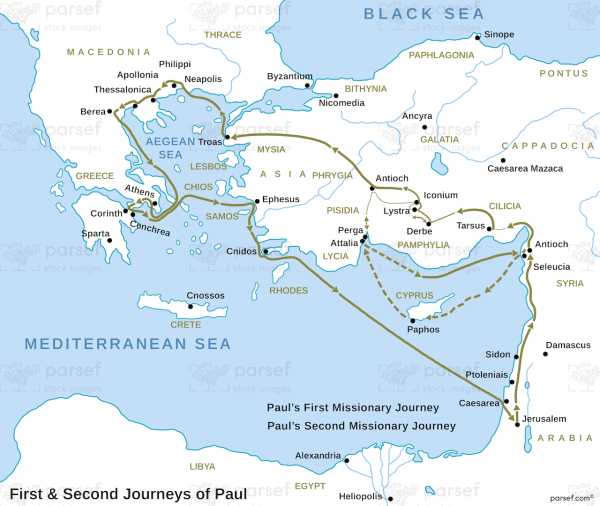
Exploring Scripture? Parsef.com offers a curated collection of Bible maps covering the Exodus, the Promised Land, and Paul's missionary journeys - ideal for deeper study of the biblical narrative.